Accelerating the SAF Market
The sustainable aviation fuel (SAF) industry is at a critical point. While SAF represents the fastest path to decarbonizing flight, with the potential to reduce lifecycle emissions by more than 80%, scaling production will take more than technological innovation. We need to transform the way we approach markets, financing, and collaboration.
World Energy is committed to solving the problems that stand in the way of bringing more SAF to more customers faster. Here are a few of the key things we’ve learned in our journey.
The Challenge: What Comes First – Supply or Demand?
When it comes to scaling the SAF market, there isn’t a single problem that’s holding things back. Instead, there are several interconnected challenges that have slowed SAF’s widespread adoption:
- Cost: Although HEFA SAF transforms waste fats, oils, and greases into renewable feedstocks, feedstock and new refining infrastructure make it more expensive to produce than fossil-based jet fuel. Historically, this has made it difficult for airlines, the traditional SAF customer, to purchase large quantities of SAF.
- Current supply is constrained: Refining capacity remains limited due to the massive upfront capital requirements, where individual projects can exceed a billion dollars. In addition to being costly, these projects often take years to complete.
- Logistics compound the problem: SAF is produced in only a few locations, often far away from where it will be used. But trucking or shipping SAF to distant airports increases logistics, costs, and emissions.
- Financing mechanisms are still evolving: Because building a SAF plant is a major investment of both money and time, investors need confidence in future demand to de-risk their capital investment and enable the SAF industry to dramatically scale supply. As government funding becomes less accessible, mobilizing private capital for decarbonization infrastructure is critical.
The Solution: A New Market Mechanism
It’s true that SAF is more expensive than conventional jet fuel and is not readily available to address all aviation emissions today. However, the ecosystem is evolving quickly and dramatically, thanks to sustainable aviation fuel certificates (SAFc).
Until recently, leading companies with ambitions climate goals have struggled to address their Scope 3 air cargo and transport emissions. However, with the practice of carbon insetting, organizations are now able to use SAF to address these emissions even if they don’t have control over the planes and ships that transport their people and goods.
Insetting means the emission reductions take place within the same sector as the emissions were produced, enabling companies to purchase emissions reductions that mirror their operations.
SAFc are a carbon inset for aviation. With SAFc, the fuel’s environmental attributes are separated from the physical fuel and sold as separately as environmental attribute certificates (EACs). This enables companies to purchase, transparently track, and claim SAF’s environmental benefits without taking delivery of the physical product. That means a company can use SAFc to address its business travel or cargo flight emissions, something that has historically been difficult to do.
Opening the Door to Decarbonization
Insetting creates a tradeable instrument that represents real emissions reductions: environmental attribute certificates. EACs give Scope 3 customers a clear, credible pathway to address their aviation and transport emissions, opening the door to a whole new customer base for biofuels like SAF. Not only do these companies often have ambitious climate commitments, they also have the financial capacity to act on them.
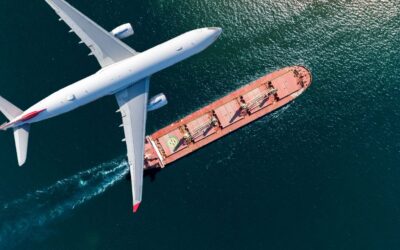
While this market mechanism is currently at work in aviation, it is increasingly being applied to other hard-to-abate sectors, from maritime shipping to steel to ground freight. The concept is the same regardless of the sector: create a tradeable instrument that represents real emissions reductions, then let market forces drive adoption.
Creating a Virtuous Cycle
SAFc agreements come in all shapes and sizes, but World Energy has been focused on the trend of long-term, multi-year offtake agreements, which have become a major accelerator of SAF supply and distribution. Long-term offtake agreements help de-risk investment, building confidence in demand and raising confidence with investors who, in turn, provide more capital to build SAF refineries.
This collaborative approach creates a cycle essential to expanding SAF production and distribution. When corporations with strong balance sheets commit to long-term SAFc contracts, they signal durable demand. This confidence enables investors to finance new facilities, growing supply. As supply increases and facilities come online, economies of scale drive down costs, making SAF accessible to more airlines and markets.
Moving Forward When Others Stand Still
As the first commercial-scale SAF producer, our commitment to the industry and customers is unwavering. The challenges facing sustainable aviation fuel are real, but so are the solutions. By pioneering market mechanisms that unlock capital, distribute costs fairly, and create transparent pathways for emissions reduction, World Energy is working to accelerate the industry’s transformation. Together with our partners, we’re building the infrastructure and market systems needed to make decarbonized flight the rule, not the exception.